Define: Responsibility
Responsibility is the conscious choice to see yourself as the creator of your experience, not the victim of your circumstances.
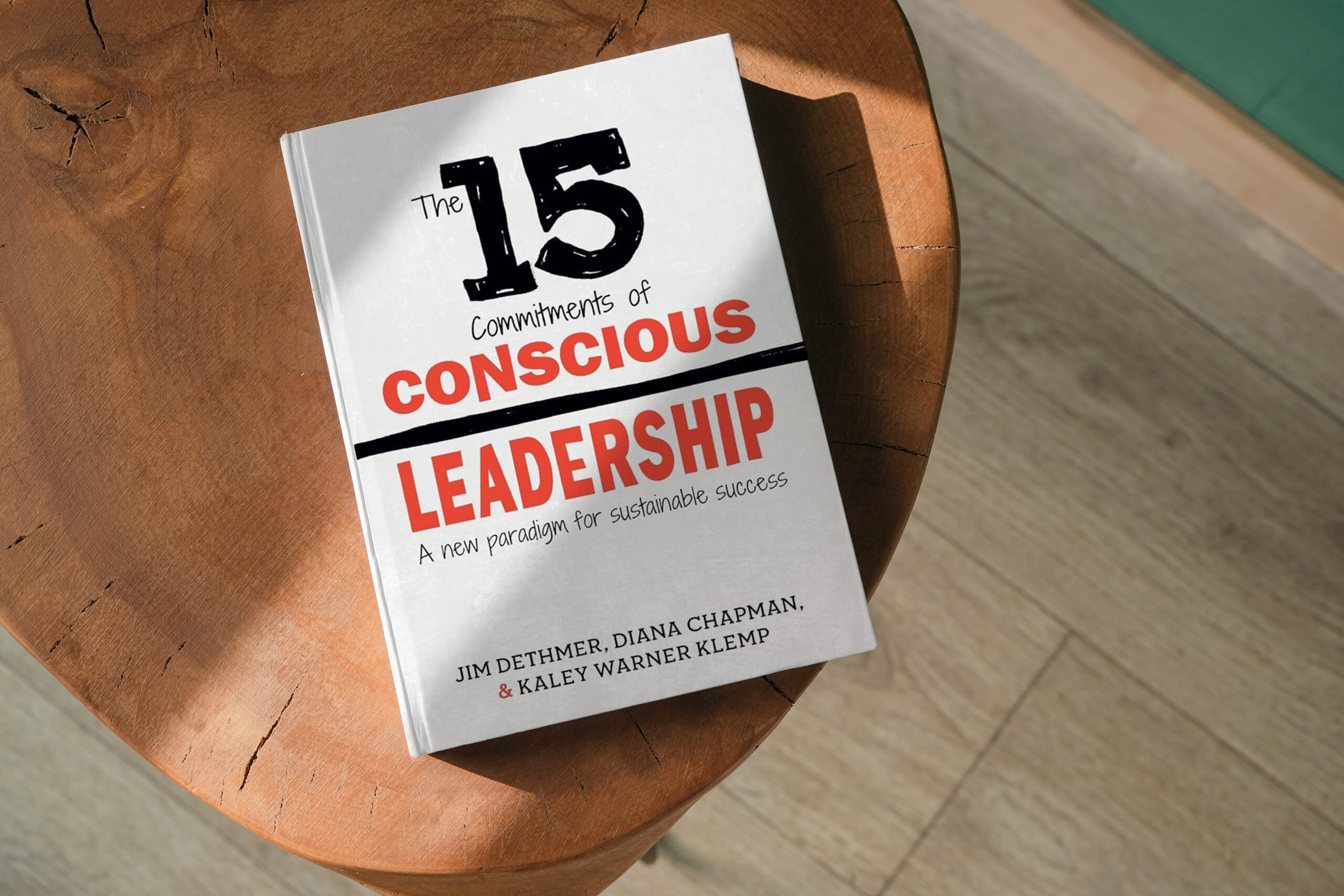
Excerpt from the Book:
In our experience, Commitment 1 is radical. The word radical can mean “root or fundamental” as well as “extreme.” In this case, Commitment 1 is both fundamental and extreme. It is fundamental because without it, leaders don’t live the other fourteen commitments and never get out of the “To Me” box. It is extreme because it is so counter to the way people normally lead and live.
The key phrase is “taking full responsibility”—as opposed to “placing blame.” “Placing” is moving something away from ourselves, and “taking” is moving something toward ourselves. Psychologists refer to this as the “locus of control.” When we place blame, we locate the cause and control of our lives outside ourselves. When we take responsibility, we locate the cause and control of our lives inside ourselves.”
From Above the Line
By Me:
I commit to taking full responsibility for the circumstances of my life, and my physical, emotional, mental and spiritual wellbeing. I commit to support others to take full responsibility for their lives
From below the Line
To Me:
I commit to blaming others and myself for what is wrong in the world. I commit to be a victim, villain, or a hero and take more or less than 100% responsibility.
Practice It:
Step 1
Identify an issue/problem/potential about anything going on in your life. Speak about the issue in “unenlightened” terms. Be dramatic. Ham it up. Blame overtly.
Step 2
Step into 100% responsibility. Physically find a place in the room that represents your commitment to being 100% responsible for the situation.
Step 3
Gain insight by completing these statements, repeating each of them several times, until you have what feels like a breakthrough:
- From the past this reminds me of…
- I keep this issue going by…
- What I get from keeping this issue going is…
- The lifelong pattern I’m noticing is…
- I can demonstrate 100% responsibility concerning this issue by…
Step 4
If during Step 3, you don’t experience a shift, go back to Step 1 and repeat the process
OR
Listening to Your Questions
Finally, we have learned that you can tell what kind of a leader you are and what kind of a culture you are creating by paying attention to the kinds of questions you ask.
In blame cultures, where people take more or less than 100% responsibility, we hear leaders and everyone else ask these questions:
- Who did it?
- Why did it happen?
- What is the root cause?
- Who participated in the chain of events that led to this?
- Who dropped the ball?
- Who’s going to fix it?
Who did it?
Why did it happen?
What is the root cause?
Who participated in the chain of events that led to this?
Who dropped the ball?
Who’s going to fix it?
If during Step 3, you don’t experience a shift, go back to Step 1 and repeat the process
- Am I willing to take full responsibility for this situation?
- What do I really want?
- If there were no obstacles, what would I be doing with my creative energy?
- Am I willing to learn whatever it is I most need to learn about this situation?
- Am I willing to see all others involved as my allies?
- Am I willing to see myself as empowered in this situation?
- How can I play with this situation?
- Where and when do I feel most alive?
- What am I distracting myself from doing or knowing?