Why Intimacy Belongs in the Workplace

There is a loneliness epidemic. The US Surgeon General sees this and has a plan. I’m grateful that our top Doc is talking about more than physical issues, though loneliness contributes to all kinds of physical issues including premature death. Dr. Murthy’s antidotes to loneliness are valuable, necessary, even essential. But they fall short of what’s needed to heal the epidemic. 

What people are missing and many are craving is not just connection, but intimacy.

Intimacy is foundational to human thriving; when we don’t experience it, the sense of lack is palpable. 

When you hear the word intimacy, what comes to mind? Most people think of sexual intimacy. That makes sense, but I would suggest that what people think of as sexual intimacy isn’t intimacy either. People equate sexual intimacy with sexual activity, any sexual activity. But most people aren’t really intimate when they’re having sex. 

So, what is intimacy? The most common definition of intimacy is closeness. This is why people think of sexual intimacy as intimacy, because I am close when I have sex. But the closeness being referred to is physical closeness; the intimacy we crave is so much more than just physical closeness, though it certainly includes physical closeness. 

The intimacy we hunger for is psychological, emotional and spiritual. People have sex all the time without these essential parts of real intimacy. In fact, people sometimes use sex to avoid being truly intimate. This is what love and sex addicts are learning in their recovery program, but you don’t have to be an addict to hide out in sexual activity. 

Years ago a friend suggested to me that intimacy means IN-TO-ME-SEE. Intimacy is being seen, really seen, and seeing. Dr. Murthy, and many others, are offering ways to connect; connection is a salve for lonely hearts but it is not intimacy. 

Intimacy is what we hunger for at the deepest level. And it’s what just as deeply terrifies us.

Being fully seen and seeing others fully is as courageously vulnerable as it gets. 

Why is intimacy so important?

I suggest that intimacy is important because the more intimate we are, the more love we experience. And love is the real deal. I’ve sat with thousands of people over the years and listened to them unpack their lives to get down to what it is they really, really want. I see that what humans want is peace (a deep seated sense of being OK) and love (being fully seen and accepted for who and what they are).

The story of creation from Genesis ends with this line: “And the man and the woman were both naked and unashamed.” They were fully seen and completely accepted: INTIMATE. Shame— the deep seated sense that I’m not OK—affects almost all of us. When we have shame, when we think we’re not OK, we hide (of course). But our hiding makes us feel even less OK. It creates the belief that “If they only knew me, they wouldn’t love me (like me, accept me, want me). What’s true is that as long as I’m hiding, not fully seen, I can never know for certain that I’m fully loved. Down deep all love feels conditional because I believe that it would go away if all of me was known.”

Intimacy is important because without it there is no unconditional love.

This doesn’t mean that with intimacy there is always unconditional love; it’s necessary, but not sufficient. When we are fully seen we might not be fully accepted. We might be rejected. This is the great risk, the terrifying risk, of choosing intimacy. But without taking the risk we can never know for sure that we are loved.

‍How to create intimacy

If you’re willing to take the risk, what do you do? Plain and simple, you reveal. You allow others to see into you; In-to-me-see. You eventually say what you’re scared to say and you show what you’re afraid to have seen. 

For years we, at CLG, have brought people together in small groups called Forums. Forums are a place to practice living and relating authentically; playing with the 15 commitments of conscious leadership. In the first few hours that a new group is together, usually a group of strangers, everyone is invited (if they want) to complete these sentence stems:

  • If you knew me, you’d know __________.
  • If you really knew me, you’d know __________.
  • What I don’t want you to know about me is __________.
  • What I reallydon’t want you to know about me is __________.

People get to wade into the pool of intimacy as slowly or quickly as they like. Almost without exception, people who risk being seen report that they feel closer to a group they have known for less than a day than they do to people they have known for many years. Why? Because they chose intimacy over hiding out. 

As I shared above, intimacy has two parts: being seen and seeing. What we know from our experience is that one feels more intimate when one sees another. Seeing another with an open heart and mind creates a profound sense of closeness.

In order to really see another and to see them without judging and shaming them, one has to have been seen and to see oneself without shame.

It is in being seen that we are healed, so that we can fully see another. When this becomes clear it becomes obvious that intimacy flows two ways. If I just see another without making myself seen it’s voyeurism, objectification, pornography. It can be titillating, but not transformational. 

Intimacy at work?!?!

What the data suggests is that people on your team and in your organization are lonely. They want connection. Smart leaders get this and they create connection-rich cultures. Conscious leaders understand that at a deeper level what people want is intimacy; to see and be seen. 

When conscious leaders fully present themselves, others feel seen. When they do their own deep work and heal their shame and fear they are able to see others without shaming or being judgmental. Conscious leaders take the risk of revealing themselves so that they can be seen. 

We believe that intimacy, along with love, belongs in the workplace. 

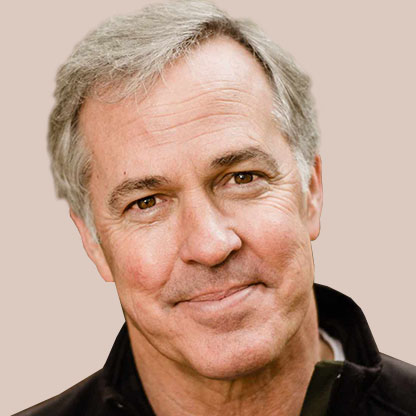
Portrait of Coach + Founder Jim Dethmer

Jim Dethmer

Co-Founder and Coach

References

  • Neuropsychology: How Many Emotions Are There?
    Psychological theories disagree on how we attribute emotions to people. A new neuroimaging study shows that such attributions involve a large number of abstract features, rather than a small set of emotion categories.

Additional Blog Posts

Firing People Who Don’t Practice the 15 Commitments

Get Unstuck with these 7 Shift Moves

5 Ways You Are Making Yourself Tired at Work

It begins with you.

Whether you’re here to lead with less drama, get better results, or stop repeating the same patterns – you’re in the right place. Start here:

Read the Book

The 15 Commitments of Conscious Leadership is where it all begins. You’ll never see leadership – or yourself – the same way again.

Explore Resources

Access our library of free practices, videos, meditations, and more. Get a feel for the work, and discover what resonates.

Get in the Room

These powerful experiences are open now, no sales call required. Check out what’s available and claim your seat before it’s gone.

Loading...

Susan Flynn

Verdant Hollow Farms, Owner

“Forum has really opened me up personally to a more fuller experience of myself... I've seen myself step back and let things unfold more naturally, and, as a result, I feel like the relationships and my connection to organizations, family members, or projects that I'm creating have been more clear and less laden with all sorts of other emotional baggage. Everything feels a little lighter and cleaner, a little more nimble in my life than it has in the past. That's been a great shift for me.”

Rodney Harl

Alene Candles, CEO

“Conscious leadership is the idea of taking exactly 100 percent responsibility—not more not less—for your role in your work, your home, your life. People get into drama situations when they take on more than 100 percent rather than asking others to accept their own responsibility. But it’s also about giving appreciation and accepting it too. That has more impact on employee satisfaction than spot awards and things like that.”

Kim Redding

Retired Chief Investment Strategist

“The first time I went to a Conscious Leadership Group forum, I thought, 'Four hours? Boy, what are we gonna talk about for four hours?' But, for my personality type in particular, I need time to really sink into things and be forced to stay with something. It's like family because you share the good, and the bad, and the ugly. I love how it draws me to go deep into issues that I may not want to, with people that I really trust and love. If you really want to get in the rollercoaster of looking at life, and your relationship, and consciousness, this is the single best way to do it. It's totally exhilarating, and it's scary. Everything is there, and if you're serious about going to the next level, I don't see how you do it without doing a forum.”

Jim Barnette

Glint, CEO & Co-Founder

“The 15 Commitments of Conscious Leadership is an inspirational masterpiece and a brilliant roadmap for leadership in the 21st century. Embracing conscious leadership and the 15 Commitments at my companies and in my life has led to both phenomenal success and deep personal joy.”

Lisa Murphy

City of Santa Cruz, Human Resources Director

“Finding Conscious Leadership Group was like finding a treasure. For me, the Enneagram Test has been the most transformative piece. That self-reflection of what it is that drives me and motivates me and what holds me back. If you're a leader and you don't understand those features about yourself, you just won't be successful. What I've learned has made me a better leader to my staff.”

Rosa Scarcelli

Stanford Management, President & Owner

“Jim Fallon is one of the most thoughtful, feeling-ful, and insightful people I know. His ability to use his own profound transformation, his deep curiosity and drive to learn and grow is a gift that is hard to quantify. If you are fortunate enough to work with him, I know you will find it invaluable. I am certain it will start you on your own path to greater self-awareness. His training as an analytical thinker has served him well as it has integrated with his expansion into the realms of feeling and tuning into the wisdom of the body. The trifecta of the heart, the head and the hand are life transforming. He will guide your growth and expansion.”

Eric Langshur

AVIA, Co-Founder & CEO Abundant Venture Partners and Life XT, Co-Founder

“One of our overarching and guiding principles here and vision is that we were trying to create a place where people could come to work and live in their genius and contribute. We see CLG as the core ingredients for helping us manifest that.”

Ron Rubin

Bridgewater Wealth, CEO

“The Conscious Leadership Group and the 15 Commitments of Conscious Leadership not only changed how we do business at Bridgewater Wealth, but they have changed my life personally. The company I founded in 1996 has been infused with new life, the culture is awake and aware, communication is crystal clear, and clients notice the difference. I’m so committed to conscious leadership now that I’m introducing the book and whole model to other CEOs in the finance industry.”

Jason Hsu

Rayliant, Chairman & CIO Research Affiliates, Global Advisor & Vice Chairman

“We thought we were just going to bring someone who was a management consultant, get a diagnostic on who's wrong, who's right and be done with that. It's been certainly far, far, far from that. It's been a fantastic journey.”

Justin Rosenstein

Asana, Co-Founder

“At Asana, we believe that conscious leadership training is so important we give every single employee the opportunity to go through a 2-day CLG Conscious Leadership training, and many report profound changes to how they work. Because of conscious leadership, our communication is clearer and more authentic, and Asana as a company is more effective in succeeding in its mission.”

Peter Parthenis

Grecian Delight, CEO

“It was difficult at first, to get people to understand and to get people committed behind this work and to practice it; but I can tell you, with one hundred percent certainty, that my ability and my team's ability to connect with each other is at a whole different level than what it was before. We can establish trust immediately. It's made a tremendous impact around being able to get things done as an organization, be aligned and being a higher performing team.”

Joe Greenstein

InnerSpace, Co-Founder

“During the persona party at our Conscious Leadership Group retreat I experienced a profound shift; it turned the hardest thing I've ever dealt with in my adult life into an incredible learning opportunity. I now know I can choose to look at every situation in life as an opportunity rather than a struggle...[In general] I think of Forum as fun. I see it on my calendar and I look forward to it.”

Sierra is the coach for you if...

Portrait of Joyce Chen

Joyce Chen

Managing Partner + Coach

Joyce is the coach for you if...

Kate is the coach for you if...

Michael is the coach for you if...

Jonathan is the coach for you if...

Portrait of Jim Fallon

Jim Fallon

Managing Partner + Coach

Jim is the coach for you if...

Casandra Wilson

CFO + Board Member , Company

Andrew Lee

CEO, Company

“Conscious Leadership Foundations fundamentally changed the way I show up as a leader. The program didn’t just give me tools — it helped me understand myself, my impact on others, and how to lead with clarity and intention. I’ve seen a noticeable shift in my team’s engagement, communication, and trust since applying what I learned. This work goes far beyond traditional leadership training; it’s practical, deeply human, and incredibly powerful. I recommend Conscious Leadership Foundations to any leader who wants sustainable growth — personally and professionally.”

Jessica Thompson

Co-Founder + Coach, Company

Unlock More Conscious Leadership Resources

Get full access to all our tools and practices designed to support you lead with clarity, courage, and connection.

FORM GOES HERE

We’ll only send resources that support your growth. No spam, ever. By continuing, you agree to our [Terms of Service], [Privacy Policy], and [Community Guidelines]. You may unsubscribe from emails at any time.

Justin Rosenstein

"Joining the Conscious Leadership Forum was like upgrading from black-and-white to full color. As a CEO, I’m used to high-pressure environments and decision fatigue—but the Forum gave me space to slow down, re-center, and connect with other leaders doing the inner work. It wasn’t just professional development—it was personal transformation. I left each session with more clarity, presence, and the kind of energy that ripples through my entire organization."

Joyce Chen

Managing Partner + Active Coach

Joyce is the coach for you if...